
Automotive Key Programming: A Beginner’s Guide

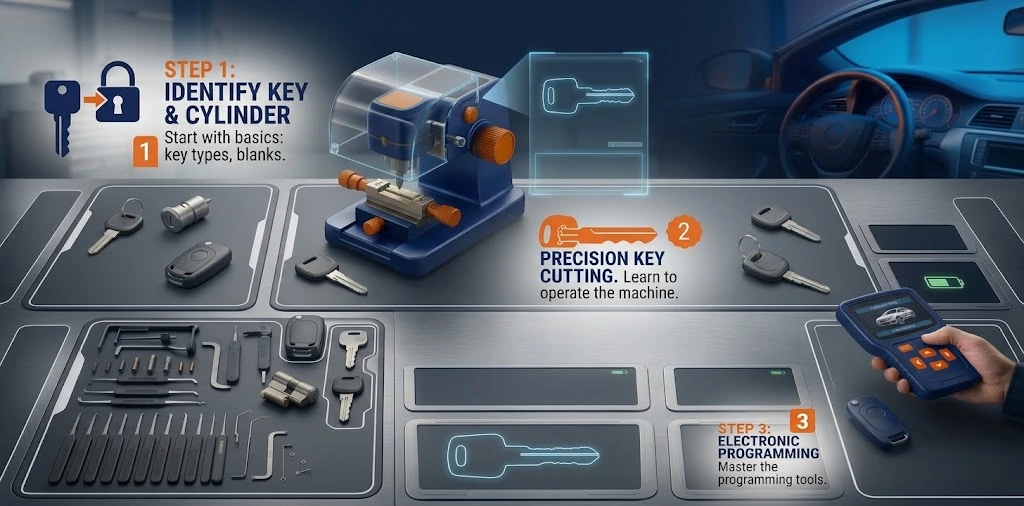
Automotive key programming is an essential skill for modern locksmith professionals. As vehicle manufacturers continue to use transponder keys, remote systems, and smart key technology, understanding how these systems work has become increasingly important.
For beginners, automotive key programming can seem complicated because different vehicles use different security systems, key types, programming requirements, and equipment. However, learning the fundamentals provides a strong foundation for understanding more advanced automotive locksmith work.
This guide explains the basics of automotive key programming, the equipment involved, common key technologies, and important considerations when choosing programming tools.
What Is Automotive Key Programming?
Automotive key programming is the process of electronically pairing a compatible vehicle key or remote with a vehicle’s security system.
Unlike traditional metal keys, modern automotive keys can contain electronic components that communicate with the vehicle. Depending on the vehicle, the electronic system may recognize a transponder chip, remote, smart key, or other authorized device.
A correctly programmed key allows the vehicle’s security system to recognize the key and perform the functions supported by that vehicle.
Why Is Key Programming Important?
Modern vehicles rely heavily on electronic security systems. A replacement key may physically fit the ignition or door but still may not operate the vehicle until the electronic portion has been properly configured.
For automotive locksmith professionals, understanding programming technology helps with services such as:
- Replacement key preparation
- Transponder key services
- Remote replacement
- Smart key services
- Key duplication
- Lost-key situations
- Vehicle-specific key solutions
The exact process depends on the vehicle manufacturer, model, year, and security system.
Understanding Common Automotive Key Types
Before learning programming, beginners should understand the major types of automotive keys.
Traditional Mechanical Keys
Mechanical keys primarily use a physical blade to operate a lock or ignition. They generally do not contain electronic security components.
These keys are useful for learning the fundamentals of automotive key cutting and duplication.
Transponder Keys
Transponder keys contain an electronic chip that communicates with the vehicle’s immobilizer system.
The physical blade and electronic component work together. A properly cut key may still fail to start a vehicle if the required electronic programming has not been completed.
Remote Head Keys
Remote head keys combine a traditional key blade with buttons for functions such as locking and unlocking the vehicle.
Depending on the vehicle, the key may contain both remote functionality and an immobilizer-related transponder.
Smart Keys
Smart keys are commonly used with push-button-start vehicles. Instead of inserting a traditional key into an ignition, the vehicle communicates electronically with the smart key.
These systems can have more advanced programming and security requirements, making compatibility especially important.
Keyless Entry Remotes
Keyless entry remotes are primarily designed to control vehicle functions such as locking and unlocking doors.
They may be separate from the vehicle’s starting system, although some vehicle platforms combine remote and immobilizer functionality.
Basic Automotive Key Programming Workflow
The exact programming procedure varies by vehicle and equipment, but beginners can understand the general workflow.
1. Identify The Vehicle
Start by confirming the vehicle’s make, model, year, and relevant system information.
Accurate vehicle identification is important because programming requirements can vary significantly between vehicles, even within the same manufacturer.
2. Identify The Key Type
Determine whether the application requires a mechanical key, transponder key, remote head key, smart key, or another compatible product.
The correct physical and electronic specifications must be considered before programming.
3. Confirm Compatibility
Programming equipment and replacement keys are not universally compatible.
Check the programmer’s supported vehicle coverage and verify that the selected key or remote is appropriate for the specific application.
4. Connect The Appropriate Equipment
Professional programmers typically communicate with the vehicle through an appropriate diagnostic connection or supported wireless system.
Always follow the equipment manufacturer’s instructions and recommended operating procedures.
5. Follow Manufacturer-Supported Procedures
Programming functions can differ by vehicle. Professional locksmith equipment may provide guided software functions that help technicians identify supported operations.
Only use procedures appropriate for the vehicle and equipment being serviced.
6. Verify The Result
After programming, verify the relevant key functions according to the vehicle and manufacturer’s specifications.
Depending on the key type, this may include checking starting authorization, remote functions, or other supported features.
Equipment Used For Automotive Key Programming
A professional automotive locksmith may use several types of equipment.
| Equipment | Primary Purpose |
|---|---|
| Key Programmer | Supports electronic key programming functions |
| Diagnostic Scanner | Helps communicate with supported vehicle systems |
| Key Cutting Machine | Cuts compatible mechanical key blades |
| Transponder Tester | Helps identify certain transponder characteristics |
| Key Cloner | Supports compatible key-cloning applications |
| Battery Charger | Helps maintain stable vehicle power during appropriate procedures |
The right equipment depends on the locksmith’s services, vehicle coverage, experience, and business requirements.
Why Software Updates Matter
Automotive technology changes constantly. New vehicle models, security systems, and programming functions can require updated software.
Many professional programming tools receive software updates that can expand vehicle coverage, improve functionality, or support newer systems.
Before purchasing a programmer, beginners should consider:
- Software update availability
- Vehicle coverage
- Update costs
- Supported key types
- Diagnostic capabilities
- User interface
- Technical support
- Accessories and compatibility
A tool with extensive vehicle coverage can be more useful to a growing locksmith business than a device focused on only a small number of applications.
Choosing Your First Key Programmer
Beginners should avoid selecting a programmer based solely on price. Instead, consider how the tool fits your intended work.
| Consideration | What To Look For |
|---|---|
| Vehicle Coverage | Makes and models you expect to service |
| Key Functions | Transponder, remote, smart-key capabilities |
| Diagnostics | Available diagnostic functions |
| Updates | Frequency and availability of software updates |
| Ease Of Use | Clear menus and guided functions |
| Accessories | Cables, adapters, and supported accessories |
| Support | Documentation and technical assistance |
A programmer should be viewed as an investment in your locksmith workflow rather than simply another piece of equipment.
Common Beginner Mistakes
Learning automotive key programming takes practice, and beginners can avoid many problems by developing good habits.
One common mistake is failing to verify compatibility before purchasing or attempting to use a key. Another is assuming that a key that physically fits a vehicle will automatically work electronically.
Beginners should also avoid skipping manufacturer instructions or ignoring software requirements. Programming equipment can vary considerably, so learning how your specific device operates is essential.
Maintaining stable equipment power and carefully following supported procedures can also help reduce unnecessary interruptions during professional work.
Building Your Automotive Locksmith Skills
Key programming is only one part of automotive locksmith work. A well-rounded technician should also understand key identification, cutting, transponder technology, remotes, smart keys, diagnostic equipment, and professional locksmith tools.
Hands-on training can help beginners connect theoretical knowledge with practical applications. Training programs can also provide an opportunity to become familiar with professional equipment before using it independently.
As your experience grows, you can gradually expand your knowledge of different vehicle platforms and automotive security technologies.
Final Thoughts
Automotive key programming is an important skill for today’s locksmith professionals. Understanding the differences between mechanical keys, transponder keys, remotes, and smart keys provides a strong starting point for developing professional knowledge.
The most important habits for beginners are verify compatibility, understand your equipment, follow manufacturer guidance, keep software updated, and practice within appropriate training environments.
With the right knowledge, professional equipment, and continued learning, automotive locksmith professionals can build the skills needed to work confidently with today’s evolving vehicle key technology.
Explore Automotive Locksmith Equipment
Affordable Keys Supply provides automotive keys, remotes, programming equipment, cutting machines, locksmith tools, batteries, and accessories for professional locksmith applications.
Shop Automotive Locksmith Supplies Today